

Moderna’s $1.3 Billion Patent Appeal: Why Section 1498 Matters to Every Government Contractor
The Federal Circuit heard arguments on whether Moderna's COVID-19 vaccine doses were made for the government, a question that will decide up to $1.3 billion in patent payments and reshape contractor IP risk.
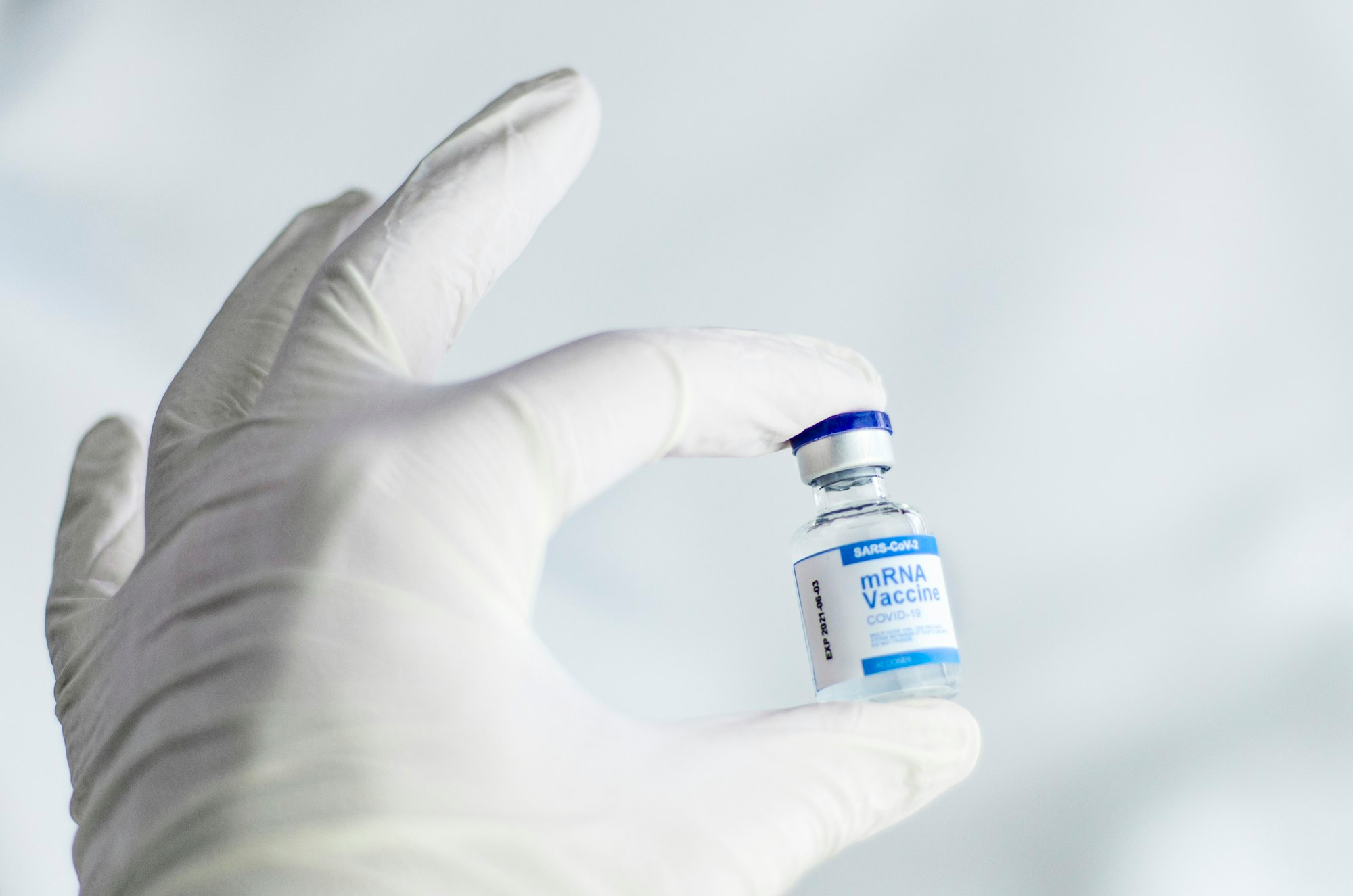
A federal appeals court is now deciding a question worth up to $1.3 billion to Moderna, and potentially far more to every company that builds products under government contracts. On November 5, a three-judge panel of the U.S. Court of Appeals for the Federal Circuit heard arguments in Arbutus Biopharma Corp. v. Moderna, Inc., a dispute over whether the COVID-19 vaccine doses Moderna supplied to the U.S. government were made “for the Government” under a long-standing federal patent statute. If they were, patent claims over those doses belong against the United States in a specialized court. If they were not, Moderna pays. Reports of the hearing said the judges pressed Moderna on how far its reading of the law would reach. No decision has been issued, and the court has not said when one will come.
For executives in life sciences, health technology and any sector that sells to federal agencies, this is one of the most consequential intellectual property cases on the docket this fall.
How the dispute got here
The case began in February 2022, when Arbutus Biopharma and Genevant Sciences sued Moderna in federal court in Delaware. They alleged that Moderna’s Spikevax vaccine used their patented lipid nanoparticle technology, the delivery system that carries messenger RNA into cells, without a license or payment, according to the IP news service ip fray. The suit asserted six U.S. patents.
Moderna’s main defense rests on its August 2020 procurement contract with the federal government, which called for at least 100 million doses. The government ultimately bought about 500 million doses from Moderna for distribution to the public, according to Patently-O. Moderna argues that a federal law, 28 U.S.C. Section 1498, shifts liability for those doses away from the contractor and onto the government. The government has sided with Moderna. It filed a statement of interest in the district court and agrees that claims over the vaccines belong in the U.S. Court of Federal Claims rather than in a suit against a private company.
The district court disagreed. It first denied Moderna’s motion to dismiss and, in February 2026, rejected the Section 1498 defense for the doses at issue, drawing a line between doses supplied to the government for its own personnel and doses purchased for broad public distribution, according to a summary of the case published by Nation Path.
The settlement that put a price on the appeal
In March 2026, the parties settled their litigation worldwide over Spikevax and Moderna’s RSV vaccine, mRESVIA. That included cases Arbutus and Genevant had filed in 2025 in Canada, Japan, Switzerland and before the Unified Patent Court in The Hague, according to ip fray. Under the settlement, Moderna paid a $950 million lump sum on July 8, 2026. A further payment of up to $1.3 billion depends on the outcome of the appeal:
- If the Federal Circuit rules against Moderna, it owes the additional $1.3 billion within 90 days of the decision.
- If the court finds Section 1498 covers some doses but not others, the payment is reduced in proportion to the doses left exposed to infringement liability.
- If Moderna wins outright, no further payment is due.
Arbutus has also sued the federal government in the Court of Federal Claims, filing in April 2026 to seek compensation for doses sold under the 2020 contract. That parallel case means the patent owners have positioned themselves to be paid by someone, whichever way the appeals court rules.
What the judges are weighing
Section 1498 was designed so that private patent disputes cannot halt products the government needs. When it applies, the patent owner’s remedy is a claim against the United States in the Court of Federal Claims, which, as ip fray notes, sharply limits a patent holder’s options compared with a district court case. Moderna argues that a ruling against it would undermine the statute’s purpose, and that patent owners could, in theory, have stopped the national vaccination program in 2020.
The panel’s questions reportedly focused on the other side of that coin: whether Moderna’s interpretation would stretch contractor immunity so far that patent owners could rarely sue private companies over products tied to government purchasing. That tension, between protecting critical public programs and preserving patent holders’ rights, is the heart of the case.
Why this matters well beyond vaccines
The ruling will help define the modern limits of Section 1498, a statute that touches defense, aerospace, telecommunications, health technology and pharmaceuticals. Government agencies buy software, devices, diagnostics and therapeutics, and many of those purchases end up serving the public rather than federal employees. A broad reading would give contractors stronger protection; a narrow one would leave them exposed for products the government buys on the public’s behalf.
For patent owners, especially smaller technology licensors, the case determines whether they can pursue the contractor directly or must take on the government in a court with more limited remedies. For contractors, it determines how much patent risk they carry when the government is the buyer but not the end user.
Why the settlement structure is worth copying
Beyond the legal question, the Moderna settlement is a useful model for resolving high-stakes disputes when one issue remains genuinely uncertain. Rather than litigate everything to the end or settle at a single compromise number, the parties fixed a guaranteed payment, then tied the remaining value to the one question an appeals court would answer. That approach caps risk for both sides, ends costly parallel litigation in multiple countries, and lets each party keep its legal position intact.
The proration feature is especially instructive. Because the court could split the difference, finding that immunity covers some doses but not others, the agreement already specifies how the payment adjusts. Building those partial outcomes into a contract in advance avoids a second fight over what a mixed ruling means. Executives negotiating license disputes, earn-outs or indemnity claims can borrow the same logic: identify the decisive open question, agree on what each possible answer is worth, and let the process deliver the result.
Practical guidance for executives
If you sell to the federal government
- Review authorization and consent language. Whether a contract expressly authorizes the use of third-party patents can matter a great deal to a Section 1498 defense. Know what your contracts say.
- Understand who the product is for. The district court’s distinction between doses for government use and doses for public distribution shows that the end recipient can change the analysis.
- Price patent risk into bids. If immunity may not apply, licensing costs and litigation reserves belong in the business case.
- Document freedom-to-operate work. Records of clearance searches and licensing decisions are valuable if a dispute arises years later.
If you own patents used in government programs
- Map where your technology ends up. Identify contractors whose products incorporate your patents and the agencies that buy them.
- Consider parallel strategies. Arbutus’s decision to file in the Court of Federal Claims while litigating against Moderna shows how patent owners can protect themselves against an uncertain immunity ruling.
- Structure settlements around open questions. The contingent, prorated payment in this case is a model for resolving disputes while a key legal issue is still on appeal.
This is general information, not legal advice. Companies facing government-contract or patent questions should consult experienced IP and government-contracts counsel.
What to watch next
- The Federal Circuit’s decision. Timing is unknown. Whether it is precedential, and how it treats doses for public distribution, will shape future cases.
- The Court of Federal Claims case. Arbutus’s claim against the government will matter more if the appeals court rules for Moderna.
- Possible further review. A decision of this size could lead to requests for rehearing or Supreme Court review.
- Contract language changes. Agencies and contractors may revisit authorization and consent clauses once the ruling arrives.
The bottom line
The pandemic forced the government and industry to move faster than patent law was built to handle. This month’s argument is where that debt comes due. However the court rules, executives who build products for federal buyers, or license technology to those who do, should treat the decision as required reading.
Sources: Nation Path; ip fray; Patently-O
Quick check
How much did you catch? Tap a question to see the answer.
1. What did Moderna pay under the March 2026 settlement, and when?
Answer: A $950 million lump sum, paid on July 8, 2026.
2. What happens to the contingent $1.3 billion if Section 1498 covers only some doses?
Answer: The payment is reduced in proportion to the doses that remain exposed to infringement liability.
3. Where would patent claims go if the doses were made for the government?
Answer: To the U.S. Court of Federal Claims, with the United States as the defendant.